
Infrastructure that keeps autonomous fleets moving.
Strategically located, robotaxi-ready hubs that accelerate market deployment, reduce deadheading and increase fleet utilisation.
We acquire the land, secure the power, handle planning and develop the infrastructure.
All without any upfront cost to operators.
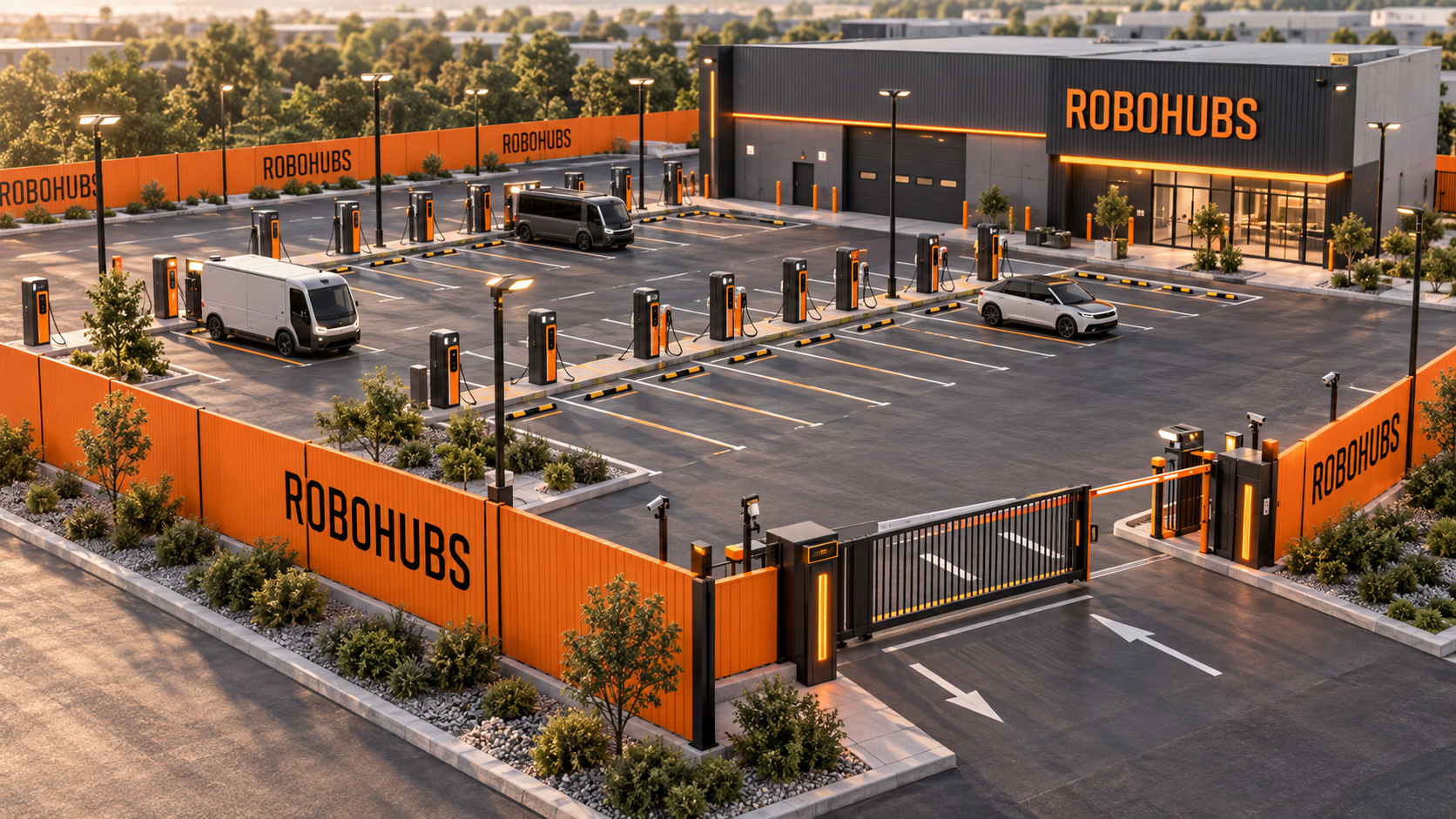
Infrastructure shouldn't slow autonomy down.
Fleet operators can acquire vehicles and launch software faster than they can secure powered real estate. Entering each new city traditionally means repeating a lengthy development process from scratch.
Robohubs takes that infrastructure programme off the operator's critical path.
Scales quickly
- Software
- Vehicles
- Fleet demand
Months.
Scales slowly
- Land
- Power
- Planning
- Construction
Years, repeated per city.
Ready before the fleet arrives.
- 01
Acquire
- 02
Plan
- 03
Power
- 04
Build
- 05
Deploy
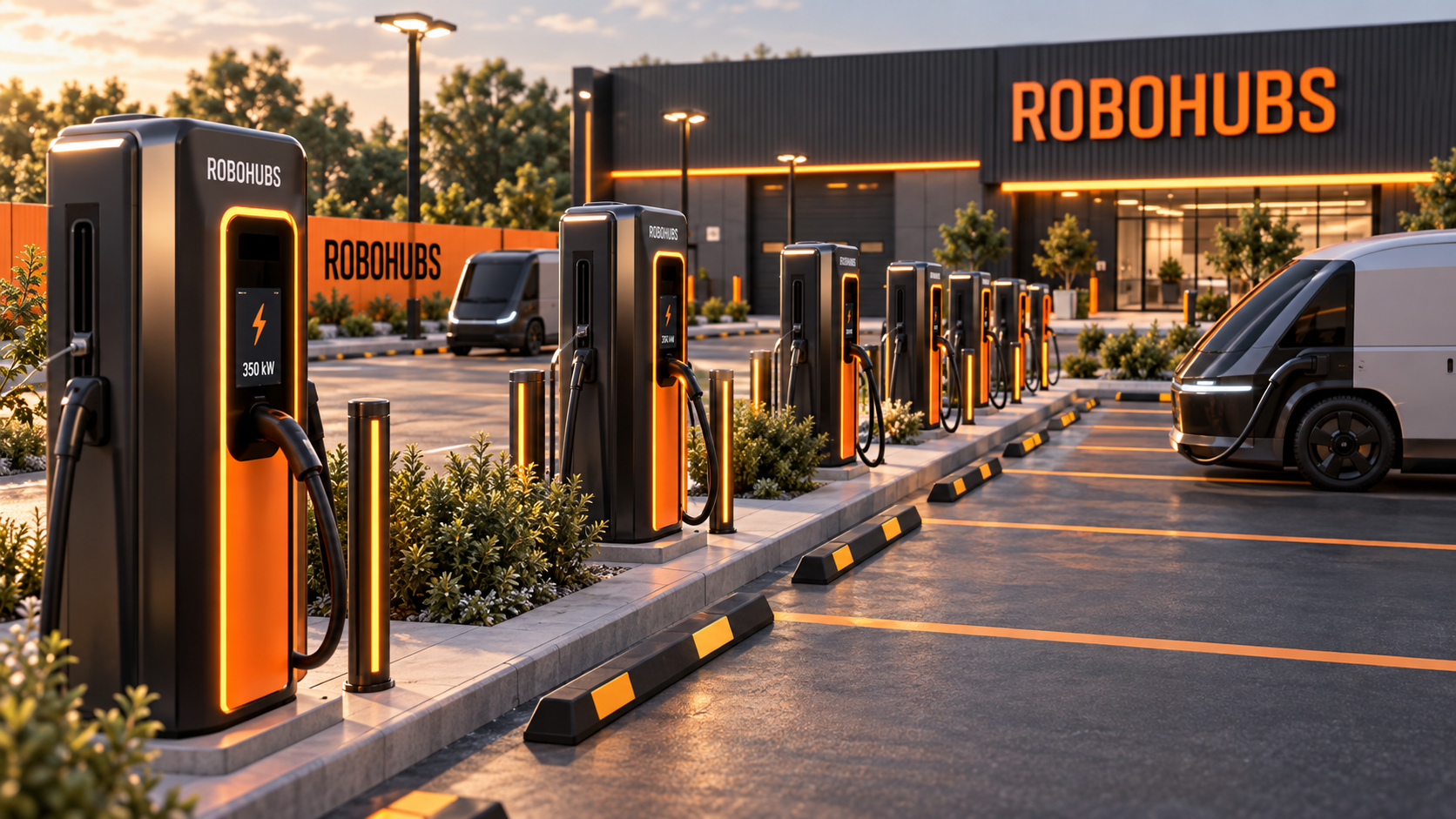
Deploy fleets. Not infrastructure projects.
Robohubs handles site acquisition, grid connections, planning and base development so operators can focus on deploying and operating vehicles.
More time in service.
Every trip to a distant depot is time the vehicle isn't carrying passengers. Robohubs places critical infrastructure closer to operating demand, reducing deadheading and shortening turnaround time.
Traditional model
One depot outside the zone
Robohubs
Distributed inside the zone
Less
Deadheading
Turnaround happens inside the operating zone.
Less
Downtime
Shorter transit to charge, clean and inspect.
More
Productive hours
Vehicle hours spent carrying passengers.
Built for robotaxis.
Not retrofitted for autonomy. Built for it.
Not generic charging infrastructure adapted later. Every hub is designed from the start around how autonomous fleets actually operate.
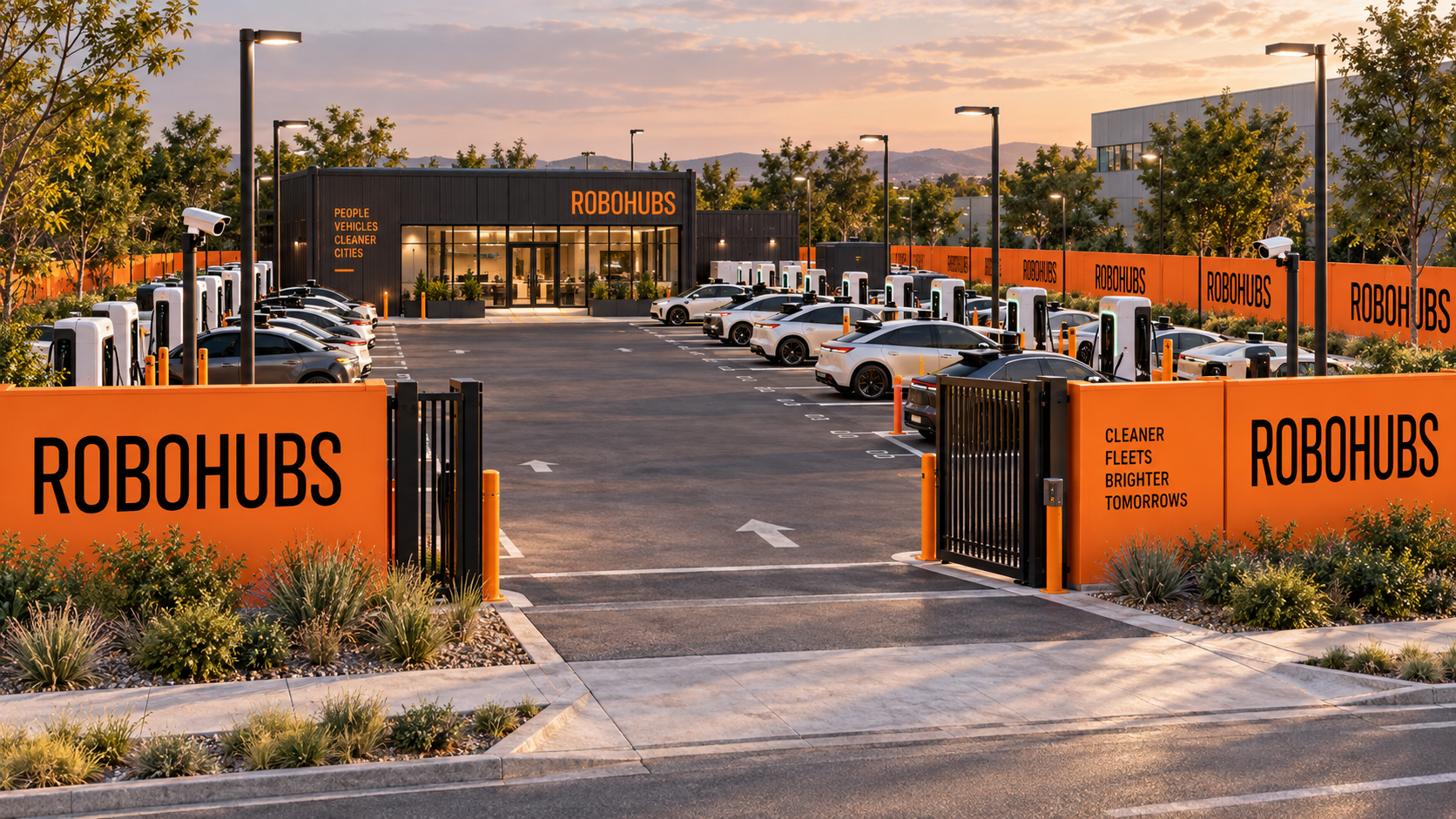
The best locations in the city.
Sites are selected according to robotaxi operating economics — close to passenger demand, close to likely fleet operating zones, easy to enter and exit, capable of 24/7 operation and of securing meaningful power.
Developing a network across the locations autonomous fleets will need most: airport corridors, the central business district, major residential areas, nightlife, transport nodes and high-demand corridors.
Explore the networkKeep your capital in the fleet.
Robohubs invests in the underlying site, power and base infrastructure. Operators gain access through long-term commercial agreements without having to acquire land or finance the underlying infrastructure themselves.
No upfront infrastructure capex.
One hub supports operations. A network supports scale.
Central depots still handle heavy maintenance, major repairs and long-term storage. Robohubs handles the frequent, high-throughput operational requirements closer to demand.
One hub
Supports operations
Three hubs
Covers a corridor
Eight hubs
Covers the core
City network
Supports scale
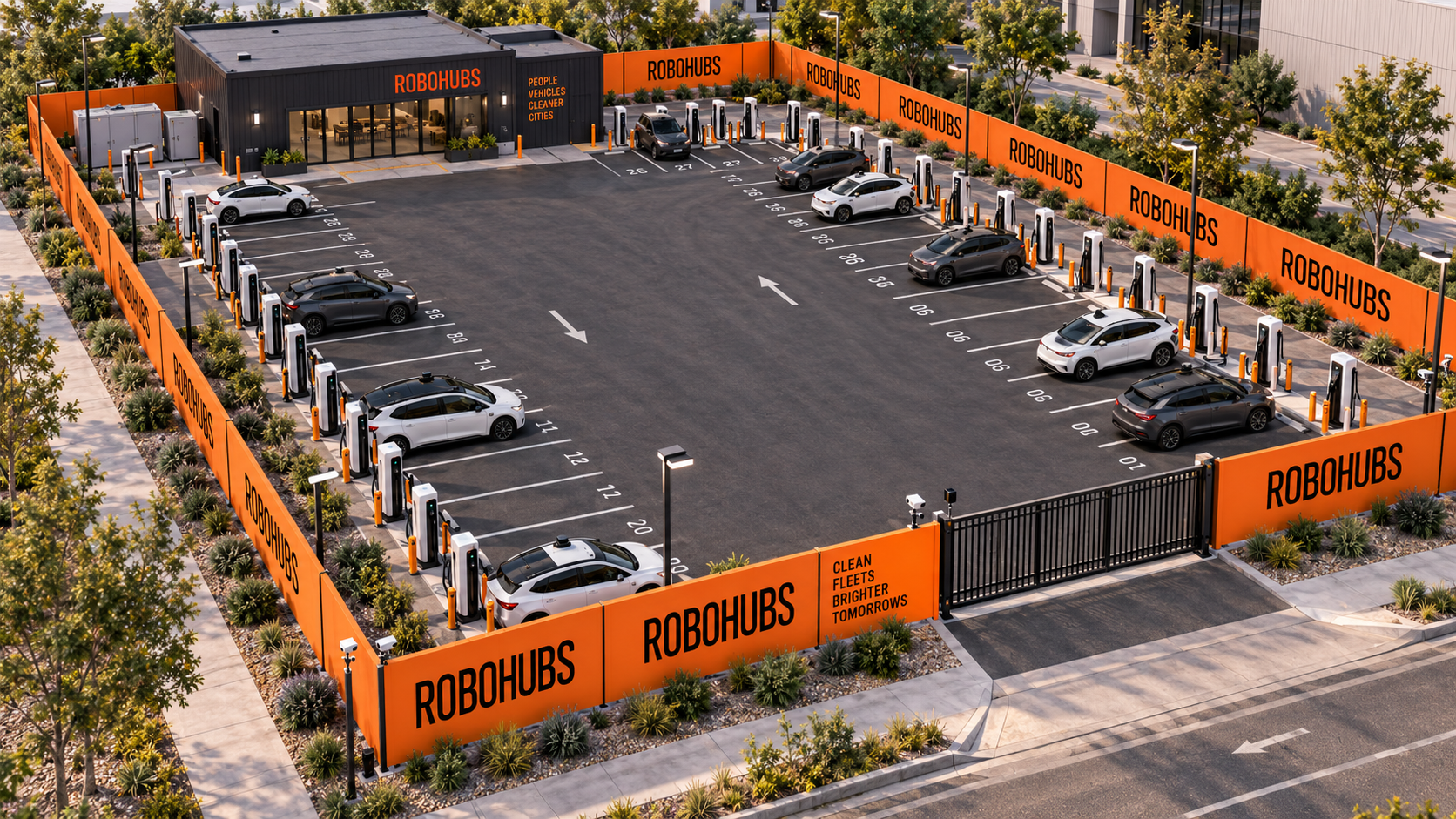
Where does your fleet need to be?
Tell us your target city, fleet size and operational requirements. We'll design the infrastructure around them.